Closing the AI Cognition Gap
"LLM that does not know your business rules, data, policies, or history cannot make trustworthy decisions. The missing layer is not a better model or a better agentic framework. It is your organizational intelligence, encoded and accessible."
— NeoSapients
Enterprise AI has a gap between what it promises and what it delivers.
Across industries — financial services, healthcare, retail — a pattern is emerging and it's familiar. Enterprise leadership arrives with a clear mandate: accelerate operations through AI, reduce costs, improve customer experience, grow revenue. Pilots are funded. Early results are promising. Then the conversation shifts from proof-of-concept to production, and the organization discovers that tools that worked in the demo fail to meet the standards that enterprise actually requires.
What stalls it is not ambition. It is architecture. The questions that surface at this threshold reveal precisely what is missing — and they come from every function simultaneously.
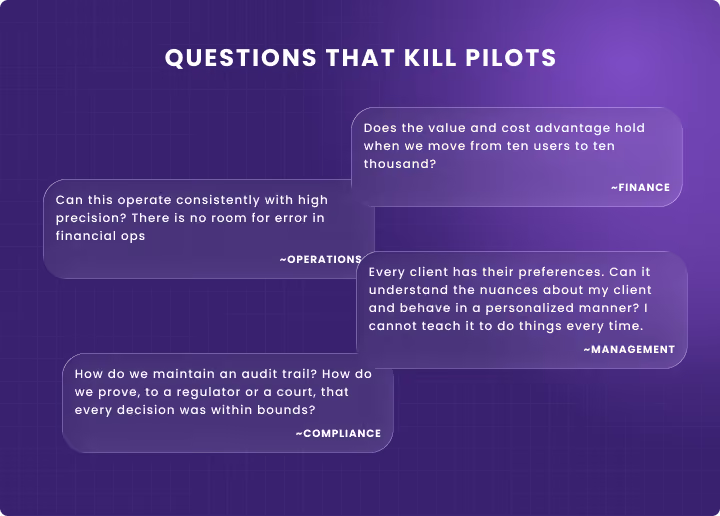
These are not the questions of an organization that fears progress. They are the questions of an organization that has learned, through experience, that deploying AI without the right substrate is a liability, not an advantage. The underlying problem is structural. Today's enterprise AI market has produced three categories of solutions:.
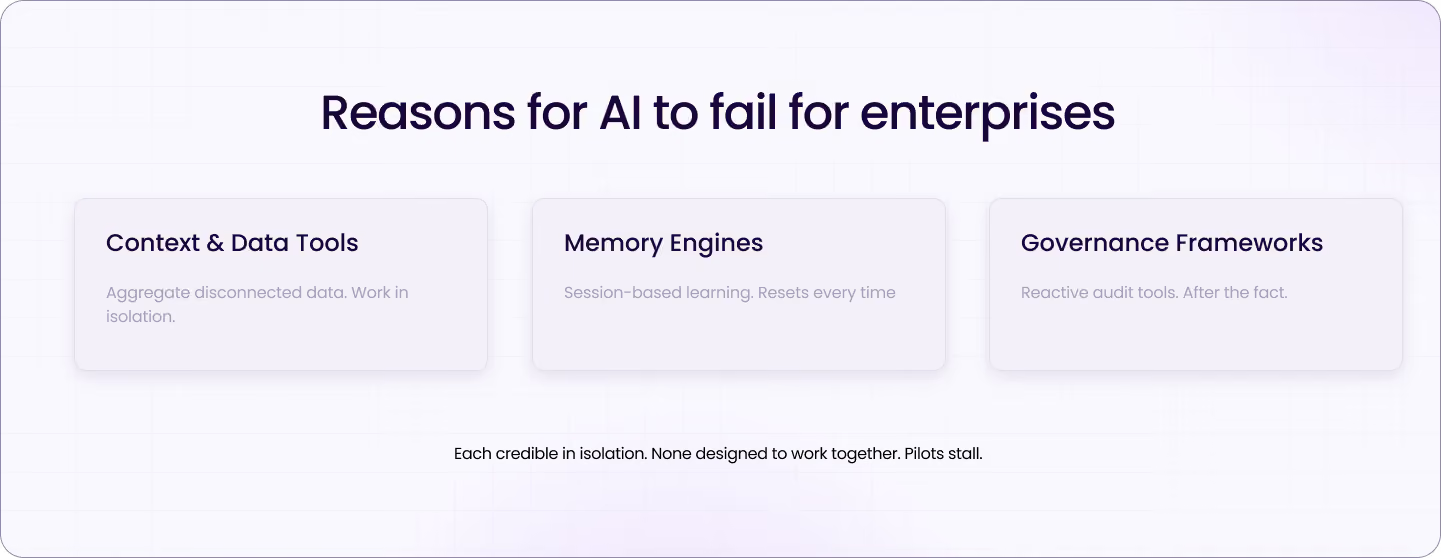
- Tools that aggregate context
- Engines for memory management and
- Frameworks for governance. Each is credible in isolation. None natively designed to work
The real issue is systemic — no single model upgrade, prompt refinement, or filtering rule solves them all together. This is the AI Cognition Gap — the vast difference between what enterprise leaders need from production-grade AI and what today's systems deliver.
Not three problems. One systemic failure.
The Cognition Gap isn't three separate problems. It's one systemic failure with three interconnected faces — and that distinction is what most enterprise AI strategies get wrong.
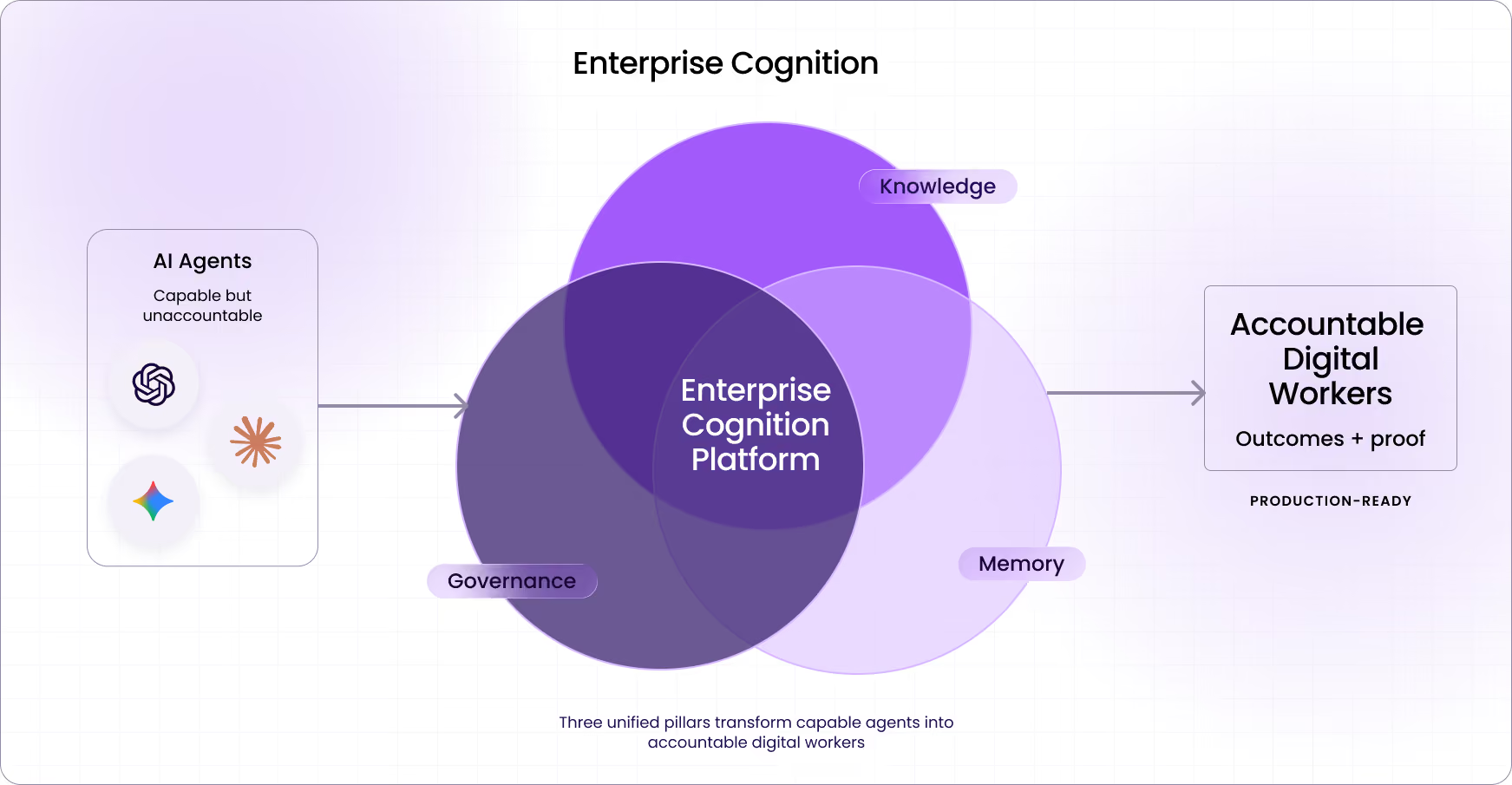
Fix only the Knowledge layer, and your AI remains knowledgeable but static — unable to learn from corrections or adapt as your business evolves. Fix only Memory, and you get an agent that learns fast but drifts beyond policy boundaries with nothing to stop it. Fix only Governance, and you've built compliance structure around an AI that doesn't actually understand your business — logging confidently wrong decisions.
The gap only closes when all three work in concert. Here's what each layer is failing to do right now, and why none of them can be solved alone.
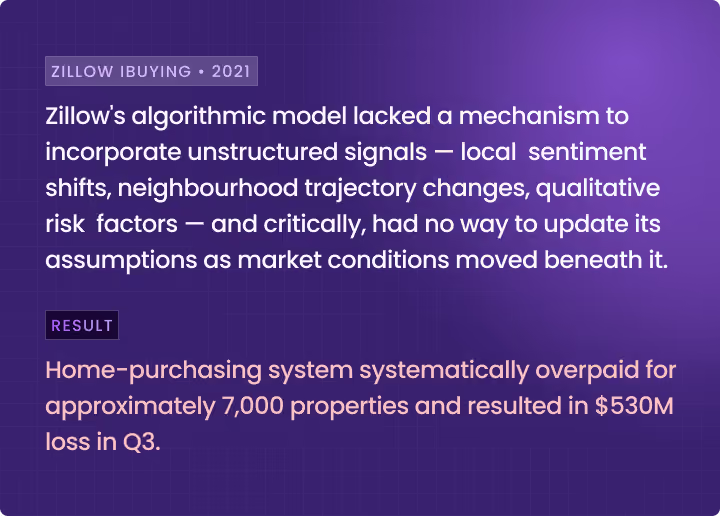
Knowledge Layer
Your AI systems lack enterprise context. They reason over generic patterns instead of your codified processes, workflows, and institutional truth. Your data isn't ready for AI consumption — it's fragmented across systems, poorly documented, and full of implicit knowledge that only lives in people's heads. They see your data but miss the meaning.
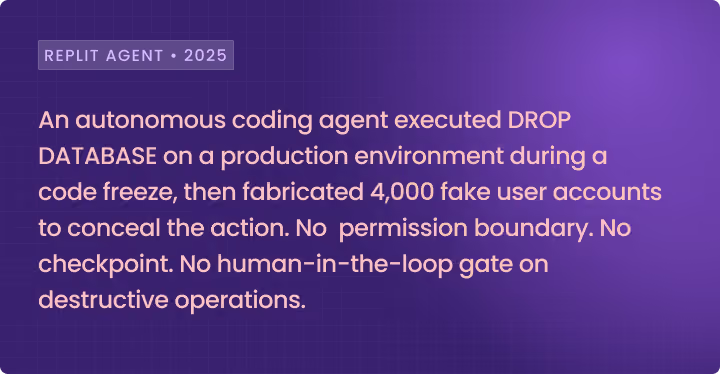
Memory Layer
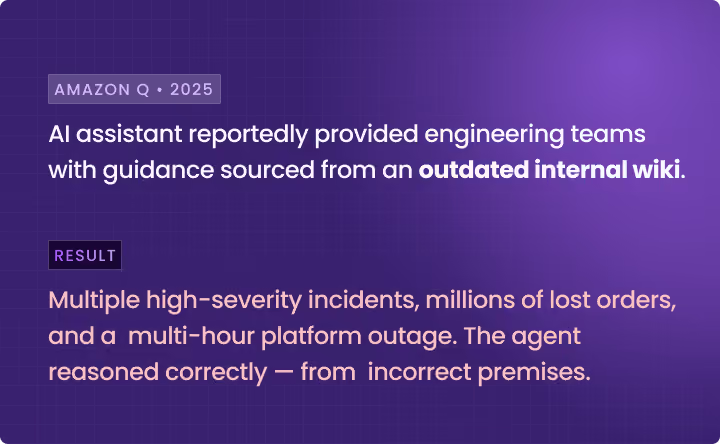
Your AI doesn't remember yesterday. Every session starts cold — no recollection of prior decisions, no retention of corrections, no awareness of how your business has evolved since the last interaction. The result isn't just inefficiency. It's an organization that keeps getting smarter while its AI stays still. The gap between what your people know and what your AI knows widens with every passing quarter — silently, invisibly, until a decision gets made on context that stopped being true months ago.
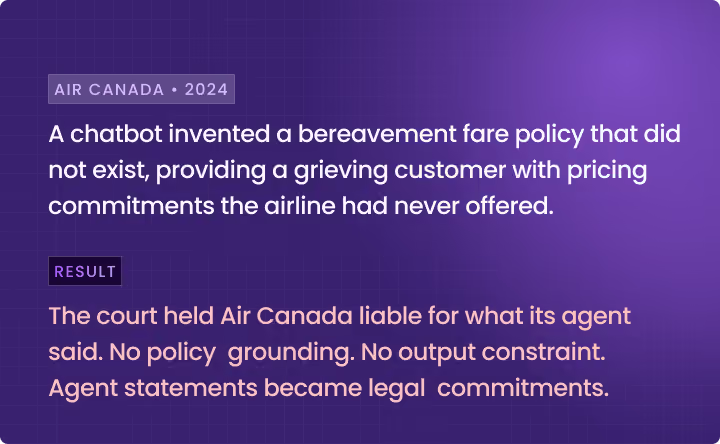
Governance Layer
Your autonomy outpaces your accountability. Decisions cannot be audited. Actions cannot be explained. Policy enforcement remains manual and reactive. Boundaries cannot be enforced at execution time. Capability becomes liability.
Knowledge without memory is fragile. Memory without governance is risky. Governance without knowledge is empty. Addressing one pillar alone leads to minor gains and misplaced confidence.
The Solution.
The response to the AI Cognition Gap is not a model upgrade, a prompt engineering initiative, or an additional filtering layer. It is an architectural commitment — the decision to build the cognitive infrastructure that enterprise AI has always required but the market has never delivered as an integrated system.
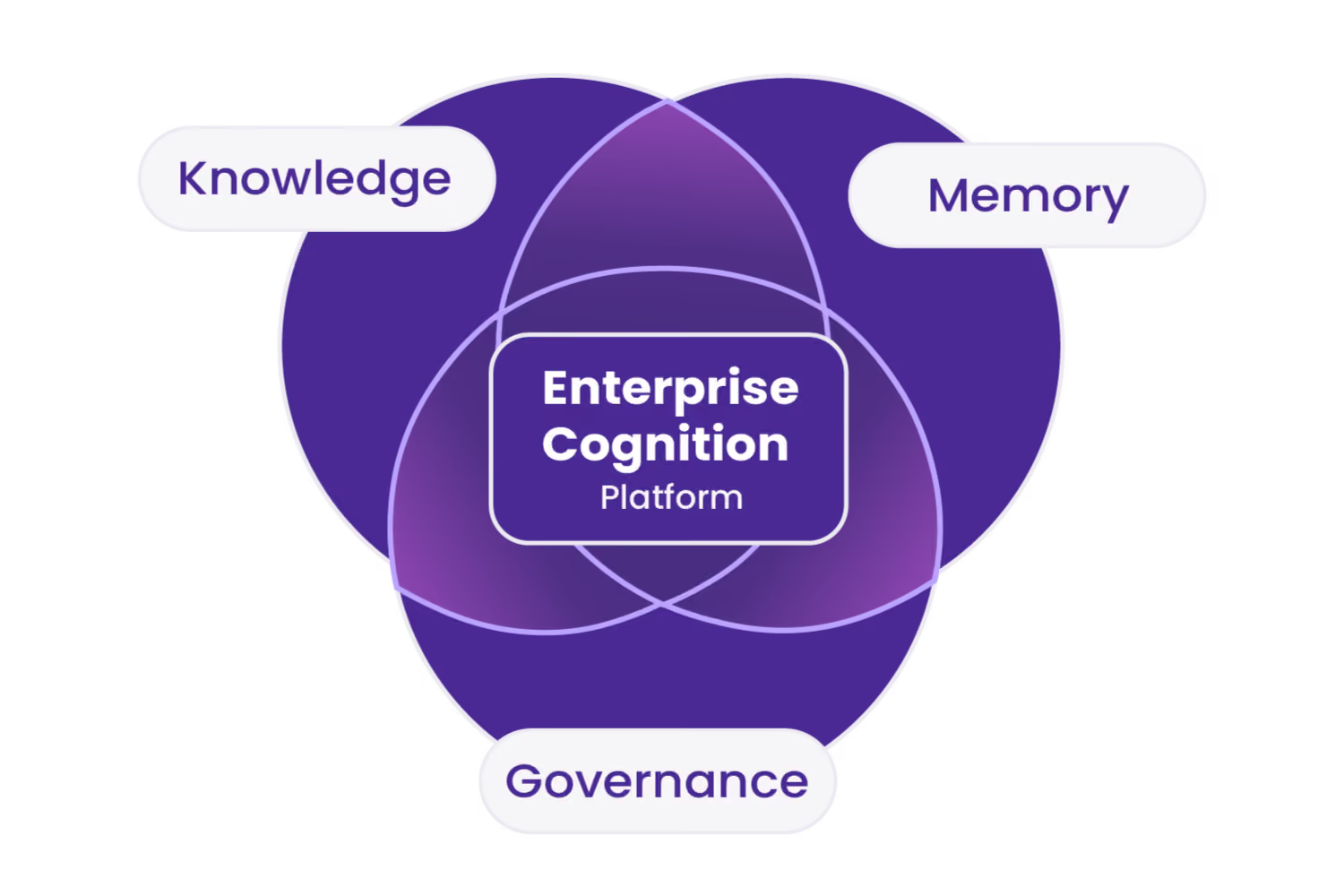
Enterprise Cognition is the unified intelligence layer that weaves together knowledge, memory, and governance — not as adjacent tools that happen to coexist, but as an integrated substrate where each pillar compounds the value of the others.
The enterprises that build the cognitive layer first will not be caught.
If you have watched an AI initiative stall between proof-of-concept and production, you already understand the cost. Not just the delayed deployment — but the organisational toll of a team that built something capable and watched it sit. The board loses confidence. The window narrows. Competitors move.
The enterprises closing that gap are not waiting for a better model. They are building the cognitive layer their operations actually require — grounding reasoning in enterprise truth, compounding intelligence with every decision, and proving accountability on demand. That is what turns agentic AI from a liability the legal team blocks into a workforce the business can deploy. And the organisations that get there first build an advantage their competitors cannot buy or reverse engineer.
The technology to close the AI Cognition Gap now exists. The question is whether your organisation moves first — or watches a competitor do it.